UV basics
What UV index is safe? The scale, explained properly
For most skin types, a UV index below 3 is considered low risk, and no special protection is usually needed. From UV 3 upwards, the World Health Organization recommends sun protection: shade, clothing, and sunscreen. “Safe” is relative, though: very fair skin can still redden during long exposure at UV 2, and deeply pigmented skin tolerates far more.
The UV index scale
| UV index | Category | What it means in practice |
|---|---|---|
| 0–2 | Low | Minimal risk for most people. Very fair skin should still be mindful during long exposure. |
| 3–5 | Moderate | Protection recommended: seek shade around midday, cover up, use SPF 30+. |
| 6–7 | High | Protection essential. Fair skin can redden in under half an hour. |
| 8–10 | Very high | Extra care: minimise midday exposure, reapply sunscreen diligently. |
| 11+ | Extreme | Unprotected skin can burn in minutes. Avoid midday sun entirely. |
Why UV 3 is the magic threshold
The WHO’s guidance is built around UV 3 because that’s roughly where the rate of skin damage starts to outpace what typical incidental exposure can repair. It’s also the threshold many public-health campaigns (including Cancer Research UK) use for “think about protection”. Below 3, most people can be outside freely, which matters, because time outdoors is genuinely good for you.
When is UV highest?
- Time of day: around solar noon, roughly 11am–3pm in a UK summer. About 60% of the day’s UV arrives in that window.
- Season: late May to mid-July peaks in the northern hemisphere; UK summer days regularly reach UV 6–8.
- Latitude and altitude: closer to the equator and higher up both raise UV sharply.
- Surroundings: water, sand and snow reflect UV; light cloud barely reduces it. See UV on cloudy days.
How Soleil helps
Know the UV without thinking about it
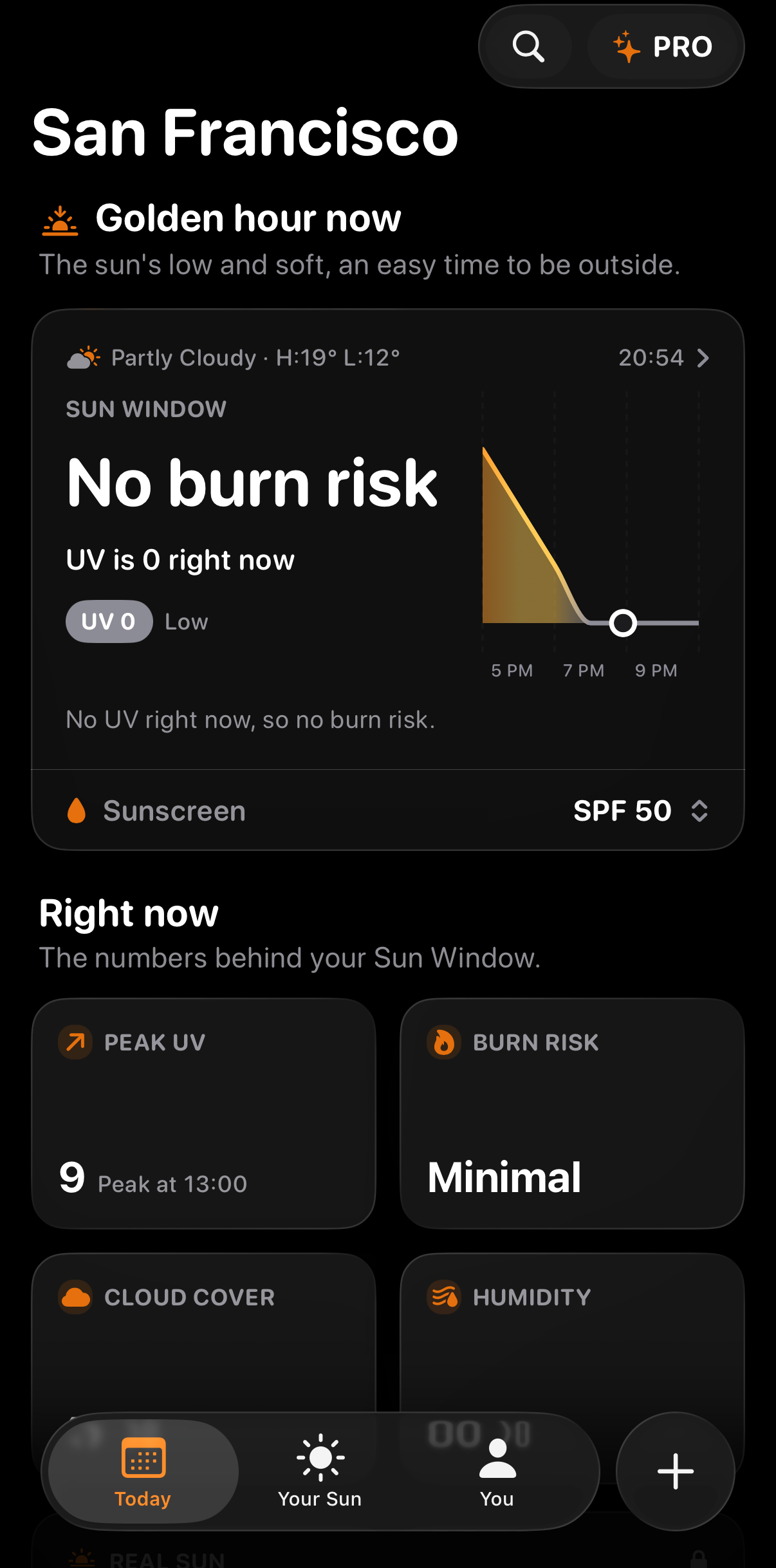
Soleil’s Your Day tab reads the live UV index for your exact location and turns it into one clear headline, the Sun Window, plus the day’s peak time, hourly curve and cloud cover. When UV crosses 3, it says protection is recommended, plainly.
Home Screen and Apple Watch widgets keep the current UV one glance away, and optional peak-UV alerts warn you before the strongest part of the day.
Related questions
-
Can you get sunburnt at UV 1 or 2?
It is unlikely for most people during normal activity, but very fair (Type I) skin can redden during extended exposure, especially with reflection from water or snow. Low UV is low risk, not zero risk.
-
What is the highest UV index ever recorded?
Readings around 25 were reported at Bolivia’s Licancabur volcano in 2003: extreme altitude plus tropical latitude. Everyday extremes of 11–14 occur in Australia, South America and at altitude.
-
Does temperature affect the UV index?
No. UV depends on the sun’s angle, ozone, altitude and cloud, not air temperature. Cool days in early summer routinely carry high UV, which is why they cause so many surprise burns.
Soleil is wellness guidance, not medical advice. For sensitive skin or diagnosed conditions, please follow a dermatologist’s plan.