UV basics
Can you tan or burn through clouds?
Yes. Up to 90% of UV passes through light or scattered cloud, so you can tan, and burn, on an overcast day. Cloudy-day sunburn is common precisely because the warning signs are missing: the air feels cool, the light feels soft, and your skin can’t feel UV at all.
How much UV does cloud actually block?
| Sky | Approx. UV reaching the ground |
|---|---|
| Clear sky | 100% (the forecast UV index) |
| Thin / scattered white cloud | ≈ 75–95% |
| Broken cumulus (sun in and out) | Can exceed 100% in bursts (see below) |
| Uniform light overcast | ≈ 30–70% |
| Thick, dark storm cloud | ≈ 10–30% |
Why cloudy days catch people out
- No heat cue. Skin senses infrared (warmth), not UV. A cool 19 °C day in June can carry UV 7.
- Longer exposure. People stay out longer when it isn’t hot: gardening, sport, festivals, all accumulating a bigger dose.
- No sunscreen habit. Most people only reach for SPF when it’s sunny and hot.
And in the shade?
Shade blocks direct UV but not the diffuse UV scattered by the whole sky, typically half the total on a clear day. A parasol on a reflective beach might only cut your dose by 50%. Shade is a genuinely good tool; it just isn’t total protection, which is why the advice is always shade plus clothing plus sunscreen at high UV. See what UV index needs protection.
How Soleil helps
Check the real number, not the sky
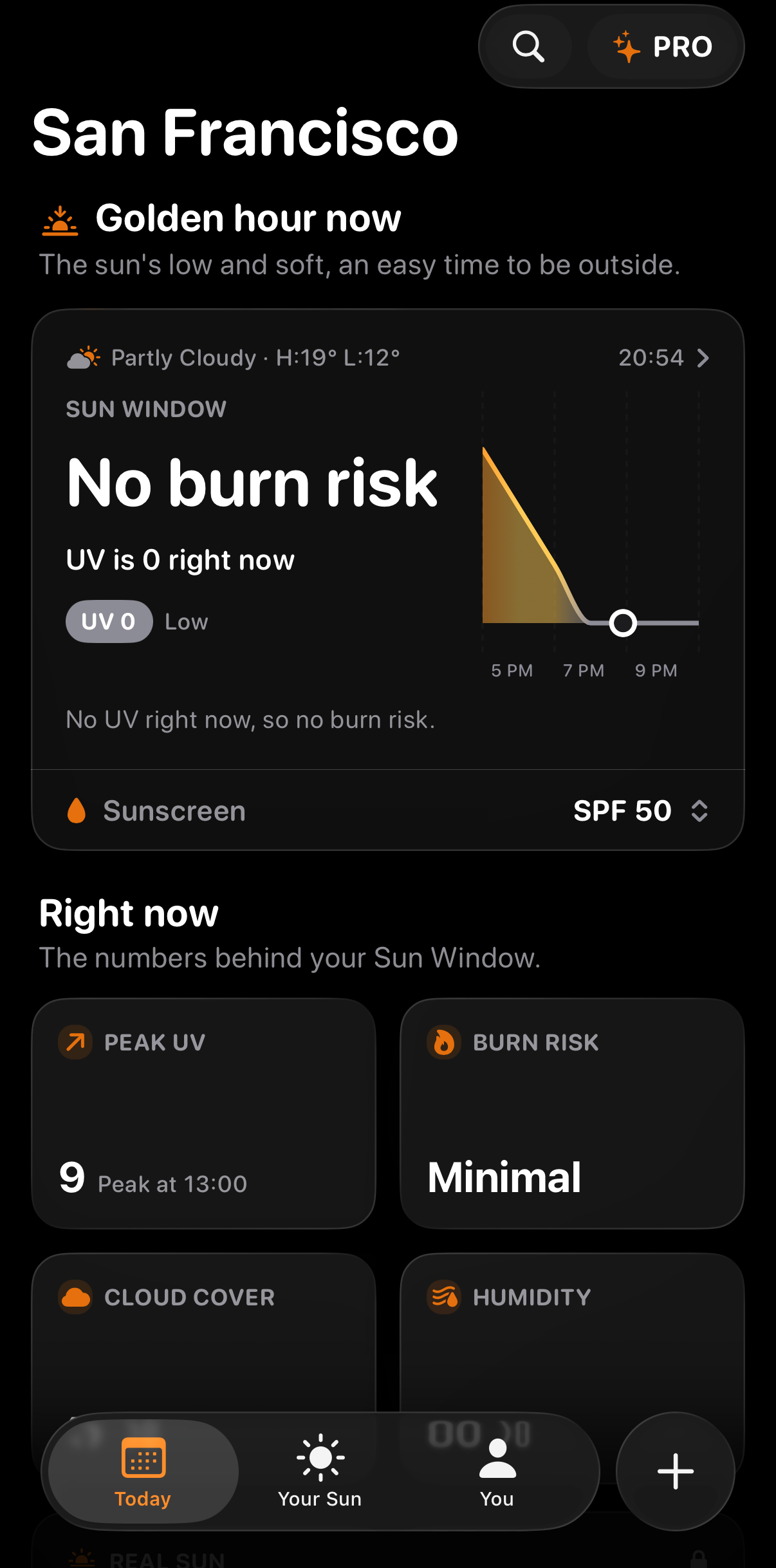
Soleil shows the live UV index for exactly where you are, next to the current cloud cover, so “it looks grey” stops being a judgement call. If UV is 3 or above, it says protection is recommended, whatever the sky looks like.
A Home Screen widget or Apple Watch complication makes this a half-second glance before you head out, the habit that prevents most cloudy-day burns.
Related questions
-
Can you burn through a car window?
Windscreens block both UVB and most UVA, but side windows often pass a third or more of UVA, enough to contribute to photo-ageing on long drives. You won’t typically burn through glass, but long-term UVA exposure is real.
-
Can you burn in winter?
In the UK lowlands, winter UV rarely exceeds 1–2, so burning is unlikely. On snow at altitude it is a different story: reflection nearly doubles the dose and skiers burn readily on cold, bright days.
-
Does rain mean zero UV?
Heavy rain clouds block most UV, but moderate levels can return within minutes of the sky brightening. Check the live index rather than assuming the day is “off”.
Soleil is wellness guidance, not medical advice. For sensitive skin or diagnosed conditions, please follow a dermatologist’s plan.