Apple Watch
Apple Watch “Time in Daylight”, explained
Time in Daylight is an Apple Watch feature (watchOS 10 and later, Series 6 onwards and SE 2) that uses the ambient light sensor to estimate how many minutes you spend in daylight, roughly light of 1,000 lux or more. Apple built it around research linking daylight exposure to lower myopia risk in children and to mood and circadian health in adults.
How it works and where to find it
- The watch samples ambient light through the day and accumulates minutes above the daylight threshold, with no GPS or UV measurement involved.
- View it in the Health app → Browse → Other Data → Time in Daylight (or via Health Sharing for a child’s watch).
- It syncs to HealthKit, so apps you authorise can read it, which is how Soleil uses it.
What it can’t tell you
Time in Daylight measures brightness, not UV. An hour under a bright overcast sky and an hour at UV 9 on a beach can log identically, but their meaning for your skin is completely different. It also can’t see sunscreen, clothing or shade. It answers “did I get outside?”, not “what did the sun do to me?”.
How Soleil helps
Real Sun: your daylight, against the day’s UV
Soleil’s Real Sun (Pro) reads your Time in Daylight from HealthKit, with your permission, read-only and entirely on-device, and draws it against the same day’s UV curve. You can see at a glance whether your outdoor time was gentle morning light or peak-index sun, and what that meant for your exposure.
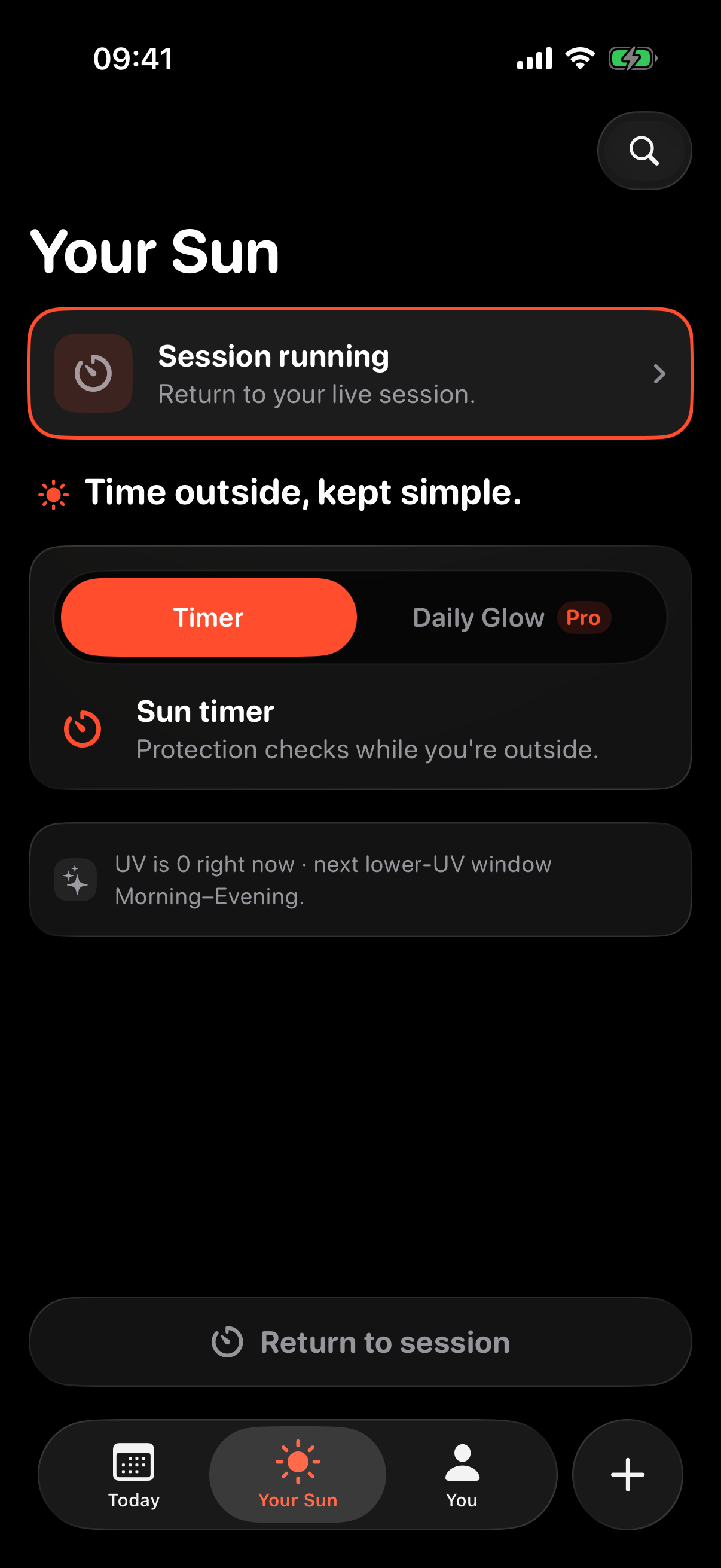
The free Soleil Watch app also puts live UV, session time and today’s daylight on your wrist, with complications and a Smart Stack card.
Related questions
-
Which Apple Watch models support Time in Daylight?
Apple Watch SE (2nd gen), Series 6 and later, and all Ultra models, running watchOS 10 or newer. Older models lack the required ambient light sensor pipeline.
-
Does sleeve position affect the measurement?
Yes. A covered watch reads darker, so winter coats and long sleeves undercount daylight. Treat the number as a good estimate rather than a precise measurement.
-
Does sitting by a window count as daylight?
Sometimes. Bright light through glass can exceed the lux threshold. But remember glass blocks UVB entirely, so window “daylight” contributes nothing to vitamin D.
Soleil is wellness guidance, not medical advice. For sensitive skin or diagnosed conditions, please follow a dermatologist’s plan.