Tanning
What’s the best UV index for tanning?
Melanin production ramps up from about UV 3, so if you’re going to spend time in the sun for colour, a moderate index of 3–5 gives skin a chance to respond gradually with a lower risk of burning. Higher UV doesn’t give you a “better” tan; it mostly compresses the time between some colour and a burn that undoes it.
Honesty first: dermatologists are clear that no UV tan is risk-free. A tan is your skin’s damage response. If you choose to tan anyway, the realistic goal is pacing, never burning, because burns drive both photo-ageing and skin-cancer risk.
How tanning actually works
UVB stimulates melanocytes to produce new melanin over 24–72 hours (delayed tanning), while UVA oxidises existing melanin for the short-lived “same-day” tint. Both wavelengths damage DNA on the way. That’s why colour built slowly over multiple short, sub-burn exposures lasts longer and costs less damage than one long session.
Pacing rules that actually protect you
- Stay well inside your burn time. Know your skin type’s approximate limit for the current UV and stop at roughly half of it. See how long you can stay in the sun.
- Avoid the midday peak. Late morning or mid-afternoon at UV 3–5 beats noon at UV 8 in every way except speed.
- Wear SPF anyway. You will still develop colour with SPF 30, more slowly and with far less burn risk.
- Skip consecutive long days. Skin needs 48–72 hours to express the melanin you’ve already triggered.
- Hydrate and moisturise. A burn peels; a paced tan doesn’t.
How Soleil helps
Pace it with Daily Glow
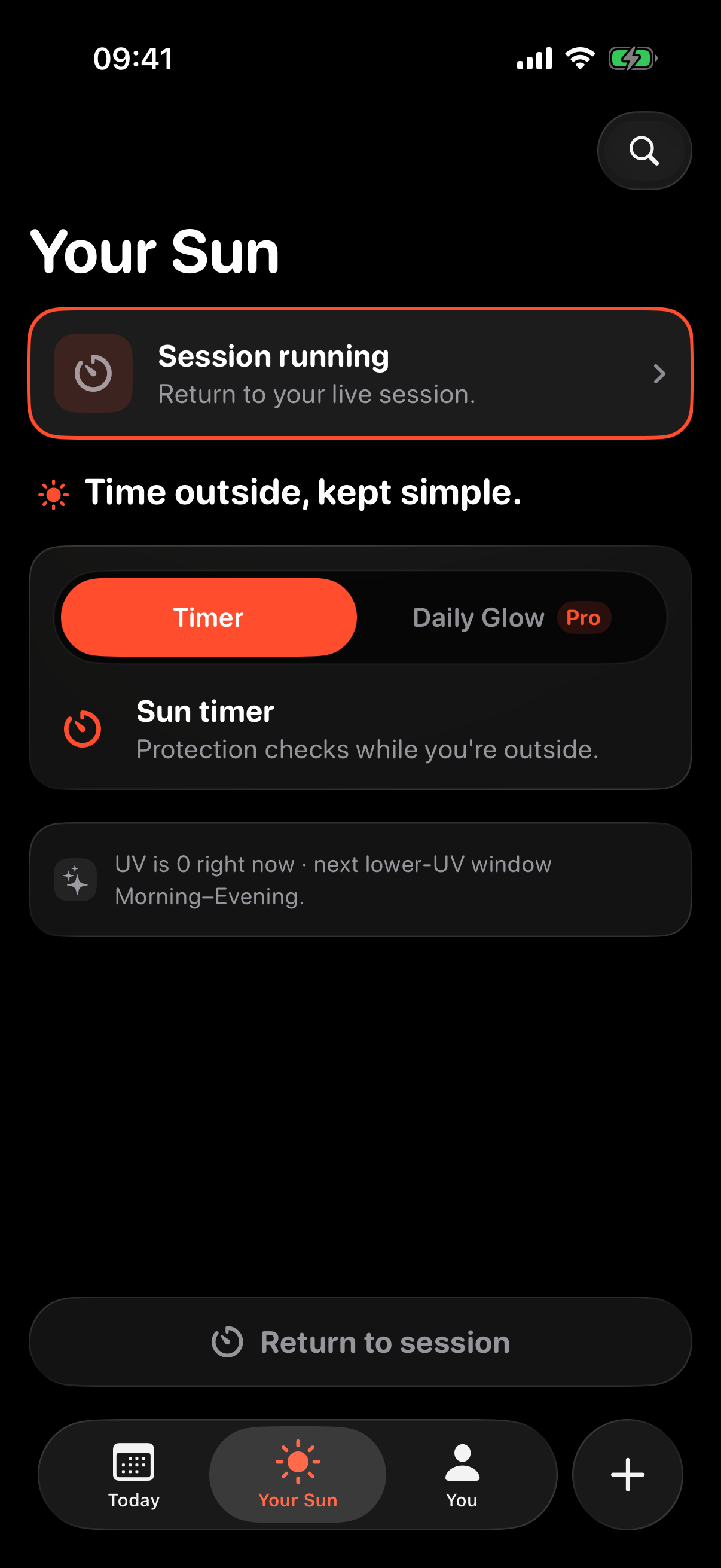
Soleil’s Daily Glow sessions (Pro) run your sun routine as a guided timer: your products, your steps, your SPF, with protection checks scheduled from the live UV and your skin type. The free sun timer covers simple sessions.
Because Soleil tracks the sessions you actually did, you can build colour across a week without silently stacking three long days back-to-back, and reapply reminders fire on schedule, sooner after swimming or towel-drying.
Related questions
-
Can you tan at UV 2?
Barely. Below UV 3, melanin stimulation is minimal for most skin types, so any colour develops extremely slowly. Fair skin is unlikely to tan at all at UV 2, though very long exposure still adds UVA damage.
-
Do tanning oils speed things up safely?
No. Most oils have little or no SPF and work partly by focusing UV on the skin. They accelerate burning as much as tanning. If you use one, choose a product with genuine broad-spectrum SPF.
-
Is a base tan protective for a holiday?
Only trivially: a natural tan offers protection of roughly SPF 2–4, far below any sunscreen. It does not earn you safe extra time at holiday UV levels.
Soleil is wellness guidance, not medical advice. For sensitive skin or diagnosed conditions, please follow a dermatologist’s plan.